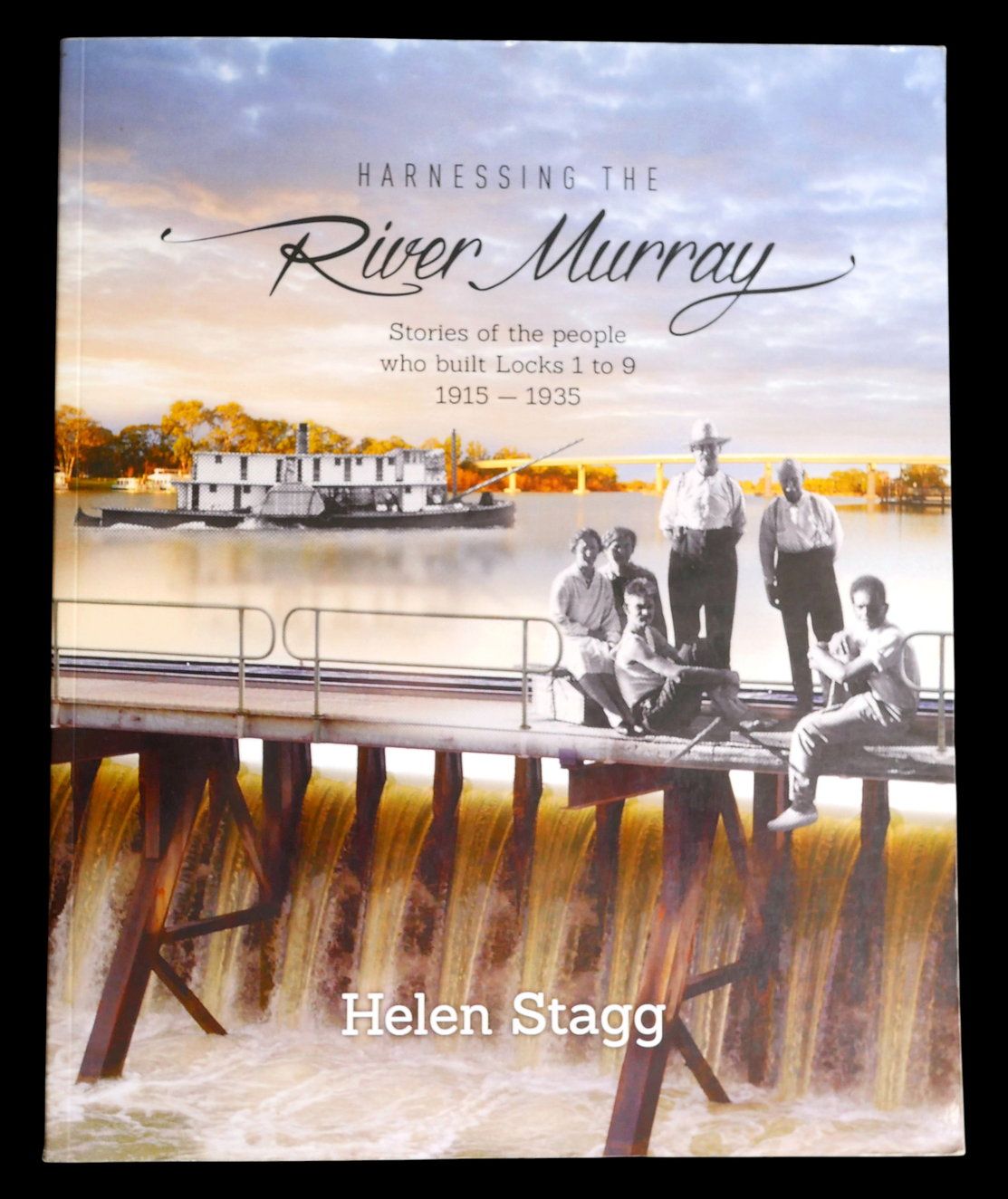
Harnessing the River Murray: Stories of the People Who Built Locks 1 to 9, 1915 - 1935 by Helen Stagg
SKU 01855
AU$53.00
Price incl. GST (10%) AU$4.82
In stock: 1 available
1
Product Details
Book Type: SECONDHAND
ISBN: 9780646937670
Book Condition: Good
Author: Helen Stagg
Edition: 1st Edition
Publisher: Forty South Publishing
Place: Mildura VIC
Year: 2015
Format: Paperback
Pages: 238 pages
Period: 20th Century
Book Description
Secondhand. Good condition. Ex library copy with no external stickers. Partial date due slip now covered with blank ex libris bookplate sticker. Wear to book corners and edges, with all corners now protected by book tape. Body text and binding are still very good.
This detailed examination of the lives of the men and their families who worked on the lock and weir construction is illustrated with 160 photographs and captures community life in the temporary villages on the banks of the mighty Murray.
Through a blend of archival material and oral history, the book reveals the daily struggles and joys of this little-known workforce whose itinerant lifestyle led to them being referred to as "the great wandering class".
The book is divided into two sections. Part One covers the contest for control of the river from the late 1800s and South Australia's early progress towards securing a "harnessed" river, and explains the stages of building a lock, the difficult working conditions and the tough times, cutbacks, accidents, and tragedies. Alongside this, the story develops of the schools, health issues and rich community activity. In addition, some rare material illustrates the lives of the women and children and allows a view of daily domestic life.
Part Two consists of the oral histories of seven people who spent their childhoods on the locks, and their memories add warmth and colour to the story.
In addition, the appendices contain an alphabetical list of over 500 accident victims at the works and allow the genealogical tracking of family members at the various locks. There are also six petitions signed by residents at various locks, another source of names for family historians.
The book is completed with a chronology, glossary, and comprehensive endnotes section. The legacy of these lock-building communities stands strong today: the structures that control the flow of Australia's great waterway, the mighty Murray. (Trove)
Harnessing the River Murray: Stories of the People Who Built Locks 1 to 9, 1915 - 1935 by Helen Stagg
You May Also Like


Display prices in:AUD