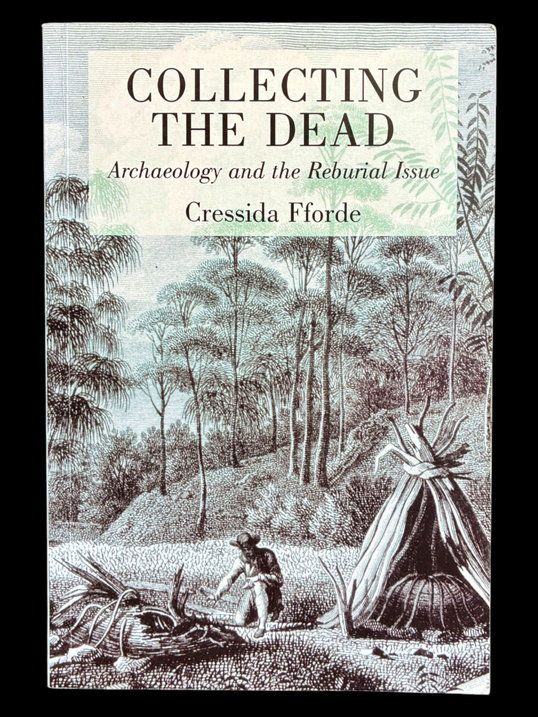
Collecting the Dead: Archaeology and the Reburial Issue by Cressida Fforde
SKU 01413
AU$39.00
Price incl. GST (10%) AU$3.55
In stock: 1 available
1
Product Details
Book Type: SECONDHAND
ISBN: 9780715632840
Book Condition: Good
Author: Cressida Fforde
Edition: 1st Edition
Publisher: Duckworth
Place: London
Year: 2004
Format: Paperback
Pages: 198 pages
Book Description
Secondhand. Good condition. Wear to book corners and edges.
The controversial 'reburial issue' first developed about thirty years ago when some indigenous groups started to campaign for the return of their ancestral human remains from museums and collecting institutions, and these requests were refused. Since then, museums in some countries have responded positively to repatriation requests while those in others continue to refuse them.
This incisive book provides what has been missing from the current debate and available literature: a detailed historical understanding of how and why these collections were amassed, and how indigenous groups and collectors responded at the time.
The book focuses particularly on Australia as the setting for its documentation and examination of the issue. The reburial question has had wide repercussions for all involved. Today, the topic remains relevant for archaeologists, anthropologists, and museum professionals, as well as many indigenous groups worldwide.
The issue highlights two very different approaches to items that hold exceptional importance in many cultures: human remains. It is also about the relationship between science and the people whose past is the subject of academic enquiry, and how the sometimes hegemonic nature of this relationship has, through the issue documented here, relentlessly bubbled to the surface. What may at first appear to be a simple clash of interests is thus revealed to have many deeper dimensions. (back cover)
Collecting the Dead: Archaeology and the Reburial Issue by Cressida Fforde
You May Also Like

Display prices in:AUD