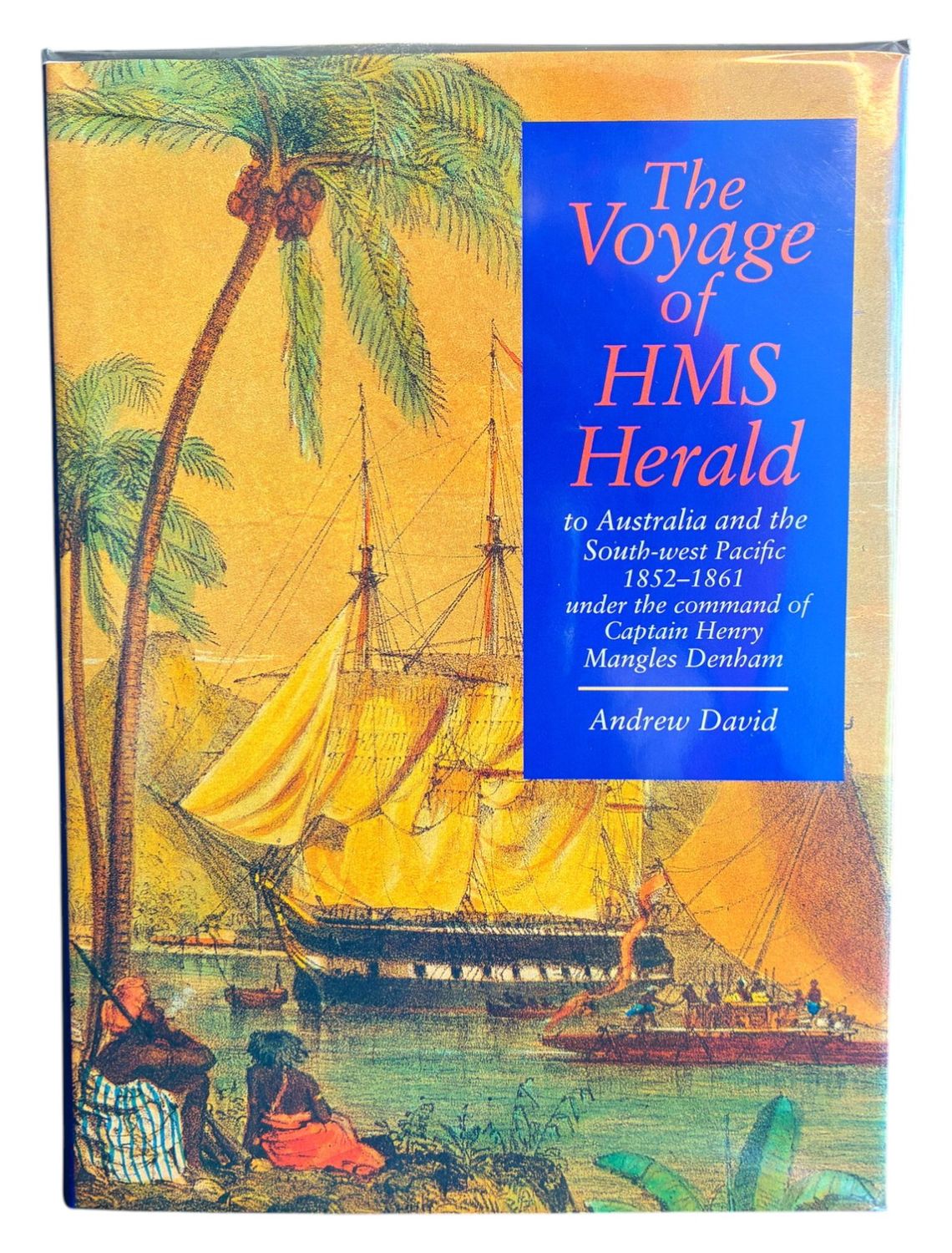
The Voyage of HMS Herald to Australia and South-west Pacific 1852-1861 Under the Command of Captain Henry Mangles Denham by Andrew David
SKU 00294
AU$48.00
Price incl. GST (10%) AU$4.36
In stock: 1 available
1
Product Details
Book Type: SECONDHAND
ISBN: 9780522843903
Book Condition: Good
Dust Jacket Condition: Very Good
Author: Andrew David
Edition: 1st Edition
Publisher: Melbourne University Press
Place: Carlton VIC
Year: 1995
Format: Hardcover
Pages: 521 pages
Period: 19th Century
Book Description
Secondhand. Good condition. Minor wear to book corners and edges. Marks on right foredge. Dust jacket has light creasing at edges and spine. Dust jacket is now enclosed in a glossy protective dust jacket cover. Interior and binding are still very good.
The voyage of HMS Herald, under the command of Henry Mangles Denham, encompassed much of the South-West Pacific and substantial parts of the Australian coast. From 1852 to 1861, the Herald surveyed and charted known landmasses and suspected hazards, thereby establishing safe shipping routes. That some of these charts are still in use is testimony to the accuracy and skill of those who created them.
Commander David extensively uses the journals of Denham and his officers to describe mid-nineteenth-century surveying and charting techniques, often undertaken in hazardous conditions. His book also provides an unusual and often entertaining view of the difficulties encountered in fieldwork.
The collection of natural history specimens, another part of the Herald's task, resulted in significant additions to British collections. Botanical ornithological discoveries are described using current nomenclature, and the habits of some species now threatened or extinct are examined through the journals of the Ship's scientists.
The South-West Pacific at the time of Denham's voyages was simultaneously a mission field, a site of commercial activity, and a colonial outpost. Almost a decade's voyaging brought the ship and her crew to remote and inhospitable locations, threatened them with storms, disease, hunger and illness, and separated them from home and families. It also earned them a lasting place in the history of maritime surveying.
The accounts of the Herald's contact with "native" peoples are enriched by detailed descriptions of cultural practices and give insight into the complex and often uneasy relationships between colonial officials, missionaries, and "natives".
Contents:
- Ch. 1. England to Australia: 21 February 1852 to 18 February 1853
- Ch. 2. Lord Howe Island, Isle of Pines and Aneityum: 19 February 1853 to 1 January 1854
- Ch. 3. New Zealand and Raoul Island: 2 January to 2 September 1854
- Ch. 4. The First Visit to Fiji: 3 September to 24 November 1854
- Ch. 5. The Search for Ben Boyd: 25 November 1854 to 30 January 1855
- Ch. 6. Chimmo's Independent Cruises: 18 April 1854 to 17 September 1856
- Ch. 7. The Dismissal of MacGillivray and the First Visit to Norfolk Island: 31 January to 24 June 1855
- Ch. 8. The Second Visit to Fiji: 25 June 1855 to 3 February 1856
- Ch. 9. The Resettlement of the Pitcairn Islanders on Norfolk Island: 4 February to 26 June 1856
- Ch. 10. The Third Visit to Fiji: 27 June 1856 to 26 February 1857
- Ch. 11. The Survey of Port Jackson: 27 February to 20 December 1857
- Ch. 12. Surveys in Bass Strait, King George Sound and Shark Bay: 21 December 1857 to 29 June 1858
- Ch. 13. The First Coral Sea Cruise: 30 June to 19 December 1858
- Ch. 14. The Second Coral Sea Cruise: 20 December 1858 to 14 October 1859
- Ch. 15. The Third Coral Sea Cruise: 15 October 1859 to 23 May 1860
- Ch. 16. Homeward Bound - Sydney to Surabaya: 24 May to 20 November 1860
- Ch. 17. Homeward Bound - Surabaya to Chatham: 21 November 1860 to 1 June 1861
- Ch. 18. Epilogue
- App. 1 Admiralty Instructions to Captain Denham
- App. 2 Rating chronometers and measuring meridian distances
- App. 3 Spelling of Fijian names
- App. 4 Glossary of Fijian and Polynesian words used in this book
- App. 5 List of Officers appointed to the Herald and Torch - 1852-61.
The Voyage of HMS Herald to Australia and South-west Pacific 1852-1861 Under the Command of Captain Henry Mangles Denham by Andrew David
You May Also Like
Out of Stock
The Journal of John Sweatman: A Nineteenth Century Surveying Voyage in North Australia and Torres Strait edited by Jim Allen and Peter Corris
The Journal of John Sweatman: A Nineteenth Century Surveying Voyage in North Australia and Torres Strait edited by Jim Allen and Peter Corris
AU$29.00
Get notified when next available
Out of Stock
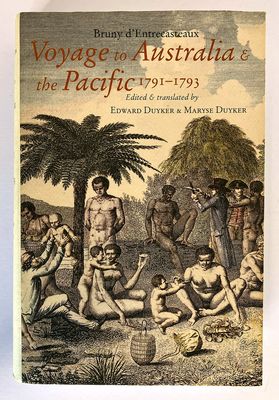
Bruny d'Entrecasteaux Voyage to Australia and the Pacific 1791-1793 edited and translated by Edward Dyuker and Maryse Duyker
Bruny d'Entrecasteaux Voyage to Australia and the Pacific 1791-1793 edited and translated by Edward Dyuker and Maryse Duyker
AU$90.00
Get notified when next available
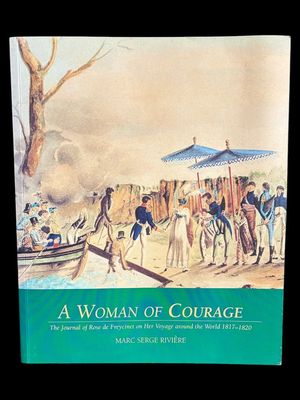
A Woman of Courage: The Journal of Rose De Freycinet on Her Voyage Around the World 1817–1820 translated and editedon Her Voyage Around the World 1817–1820 translated and edited by Marc Serge Rivière
A Woman of Courage: The Journal of Rose De Freycinet on Her Voyage Around the World 1817–1820 translated and editedon Her Voyage Around the World 1817–1820 translated and edited by Marc Serge Rivière
AU$45.00
Display prices in:AUD