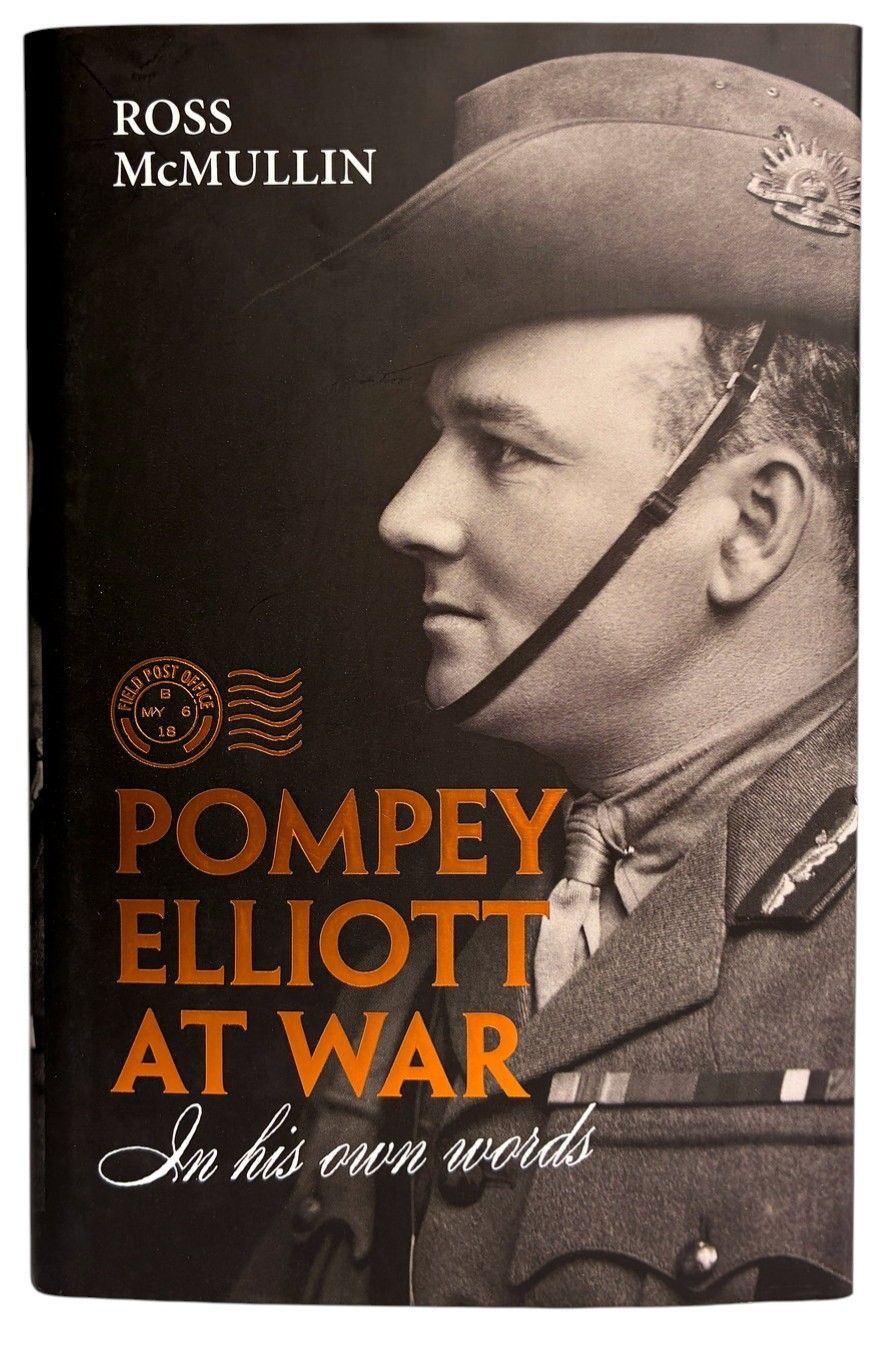
Pompey Elliott at War: In His Own Words by Ross McMullin
SKU 010791
AU$35.00
Price incl. GST (10%) AU$3.18
In stock: 1 available
1
Product Details
Book Type: SECONDHAND
ISBN: 9781925322415
Book Condition: Very Good
Dust Jacket Condition: Very Good
Author: Ross McMullin
Edition: 1st Edition
Publisher: Scribe Publications
Place: Carlton VIC
Year: 2017
Format: Hardcover
Pages: 525 pages
Period: 20th Century
Book Description
Secondhand. Very good condition. Ex library copy with no external stickers. Sticky tape on front blank page is now covered with blank ex libris bookplate sticker. No stickers or stamps. RFID patch on inside back cover. Minor wear to book corners and edges. Dust jacket has light creasing at edges and spine. Interior and binding are also very good.
Hundreds of Australian first-person narratives of World War I have been published, but none more riveting than this one.
The wartime letters and diaries of Pompey Elliott (1878-1931), Australia's most famous fighting general, are exceptionally forthright. They are also remarkably illuminating about his volatile emotions. Pompey not only wrote frankly about what happened to him and the men he commanded, but also about what he felt about both. Having arranged a no-secrets pact with his wife for their correspondence before he left Australia in 1914, he adhered to that agreement throughout the conflict.
Moreover, Pompey expressed himself with vivid candour in his diaries and other correspondence. He wrote rapidly and fluently, with fertile imagery, a flair for simile, and an engaging turn of phrase. His extraordinary letters to his young children turned even the Western Front into a bedtime story.
Pompey was prominent in iconic battles and numerous controversies. He was wounded at the Gallipoli landing, and four of his men were awarded the Victoria Cross for conspicuous bravery at Lone Pine. No one was more instrumental than Pompey in turning looming defeat into stunning victory at both Polygon Wood and Villers-Bretonneux. No Australian general was more revered by those he led or more famous outside his own command. This book will transform our awareness of Pompey's importance in the dramatic final year of World War I.
This is an outstanding, moving, and comprehensive contribution to our understanding of the experience of military leadership from Australia's great fighting general of WWI This is destined to be treasured as one of the great personal accounts of Australians at war. (book flap)
Pompey Elliott at War: In His Own Words by Ross McMullin
You May Also Like
Out of Stock
Charles Kingsford Smith and Those Magnificent Men by Peter FitzSimons
Charles Kingsford Smith and Those Magnificent Men by Peter FitzSimons
AU$16.50
Get notified when next available
Display prices in:AUD